
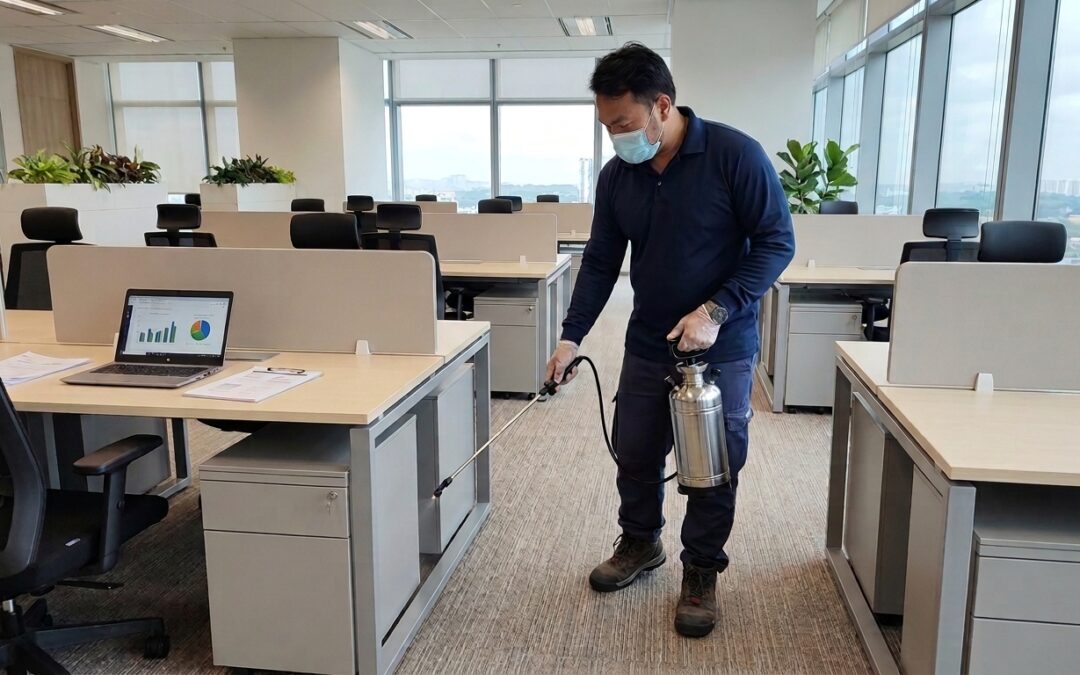
Office pest control in Singapore carries a different risk profile from restaurants or warehouses — there’s no food licence on the line, but the impact on employee morale, wellbeing and workplace reputation is just as real. Cockroaches in the pantry, ants trailing across desks, and rodents gnawing wiring in the server room are the most common issues, each with their own prevention approach. This guide covers where office pests actually hide, why server rooms deserve more attention than they typically get, and a practical checklist for keeping a workplace genuinely pest-free.
Key Takeaways
- Office pest control carries lower regulatory stakes than food or industrial premises, but higher stakes for employee morale, wellbeing and workplace reputation.
- Pantries, desks and breakrooms remain the most common hotspots, largely driven by food left out and inconsistent cleaning habits rather than structural issues.
- Server and IT communication rooms are a commonly overlooked risk area, since rodents gnawing on wiring can cause short circuits and genuine fire hazards.
- Bed bugs typically enter offices through employee bags, visitors or second-hand furniture, a different entry route from most other office pests.
- Offices that have been vacant for extended periods, such as after a long closure or renovation, often need a more intensive flush-out before staff return.
- Monthly to bi-monthly professional visits are typical for most offices, adjusted based on pantry usage patterns and past activity.
Why Office Pest Control Is Different From Other Commercial Settings

Compare an office to a restaurant or a food manufacturing plant, and the risk calculation looks quite different. There’s no SFA licence at stake, no HACCP audit waiting to flag a finding, no production line to protect from contamination. That doesn’t make office pest control a lower priority — it just means the stakes show up somewhere else: in how employees feel about coming to work, and in the impression a pest sighting leaves on a client walking through reception.
The Human Side of Office Pest Problems
It’s worth taking seriously just how strongly people react to pest sightings at work. The fear of cockroaches specifically has a clinical name — katsaridaphobia — and it’s common enough that a single visible cockroach in a shared pantry can genuinely affect morale for days, not just for the person who spotted it. Employees who hear scratching in the ceiling void or find droppings near their desk don’t file that away as a minor inconvenience; it becomes something they mention to colleagues, and eventually something that shapes how they feel about the workplace overall.
This is the practical argument for taking office pest control seriously even without a compliance deadline forcing the issue: absenteeism, complaints and general workplace discomfort carry real costs, even if they don’t show up on an audit report. A facilities manager weighing up whether a monthly pest control contract is worth the spend is often, without realising it, also weighing up something closer to employee retention and workplace satisfaction than pure hygiene. Those costs are harder to put a number on than a failed food safety audit, but they’re no less real for being harder to measure — a workplace that develops a reputation among staff for recurring pest issues tends to see that reputation travel quickly, particularly in shared office buildings or co-working spaces where word spreads between tenants.
There’s also a client-facing dimension worth mentioning. Reception areas, meeting rooms and shared pantries are frequently the parts of an office that visiting clients or candidates actually see, which means a pest sighting in exactly the wrong moment can shape someone’s impression of the business in ways that have nothing to do with the quality of the work being done there.
Common Office Pests and Where They Hide
| Pest | Typical Zones | Why They’re There |
| Cockroaches | Pantry cabinets, under vending machines, behind furniture | Food residue, warmth, dark undisturbed spaces |
| Ants | Desks, pantry, breakrooms | Food crumbs, sugary drink spills, scent trails |
| Rodents | Server rooms, false ceilings, lift shafts, service ducts | Quiet, warm, rarely disturbed spaces |
| Bed Bugs | Soft furnishings, cubicles, meeting rooms | Carried in via bags, visitors, or second-hand furniture |
| Mosquitoes | Planter trays, pantry drains, lift lobbies | Standing water in easily overlooked spots |
Cockroaches and ants remain the most frequently encountered office pests, largely because they respond directly to everyday habits — eating at desks, leaving drinks unattended, inconsistent bin management — rather than to anything structurally wrong with the building.
The IT/Server Room Risk Most Offices Overlook
Server and IT communication rooms tend to get far less pest control attention than pantries, largely because nobody expects to find a pest problem somewhere so clean and climate-controlled. That assumption is exactly what makes these rooms attractive to rodents: warm, quiet, rarely disturbed, and offering plenty of cable runs to gnaw on.
Rodents gnaw as a natural behaviour to keep their continuously growing teeth in check, and server room wiring is an unfortunately convenient target. The consequences go well beyond a chewed cable — gnawed wiring can cause short circuits, and in more serious cases, a genuine fire risk. Given how much of a modern office depends on server room uptime, this is one area where prevention deserves more attention than the general condition of the room might suggest is necessary.
How Bed Bugs Enter Offices
Unlike cockroaches or ants, bed bugs don’t typically enter an office through a structural gap or a food source. They arrive on people and objects — an employee’s bag after a trip, a visitor’s coat, or a piece of second-hand furniture brought in for a breakout area. Once inside, they can spread between cubicles, meeting room furniture and soft seating relatively quickly, particularly in open-plan layouts where furniture and personal items move around the office throughout the day.
This makes bed bugs one of the harder office pests to prevent through housekeeping alone, since the entry route runs through people rather than the building itself. Early detection and prompt professional treatment matter more here than exclusion measures, which is why staff awareness — knowing what to look for and who to report it to — is a genuinely useful part of an office’s prevention strategy.
The Office Pest Control Checklist
Pantry & Breakroom
- Food stored in sealed containers, not left out on counters
- Fridge cleared of expired items regularly
- Bins emptied daily, not left to accumulate over a long weekend
- Sink and drain areas kept dry and clean
Desks & Workstations
- Food crumbs and spills cleaned promptly, not left until end of day
- Drawers checked periodically for forgotten snacks
- General clutter reduced, since it creates hiding spots
Server & Communications Rooms
- Periodic visual checks for droppings, gnaw marks or nesting material
- Cable runs and entry points sealed where possible
- Monitoring devices considered for facilities with a history of activity
Lift Lobbies & Common Areas
- Planter trays checked for standing water
- Communal areas cleaned to the same standard as pantries
- Entry points around lift shafts and service ducts inspected periodically
Structural Entry Points
- Door and window seals intact
- Ceiling voids checked during routine maintenance
- Gaps around cable and pipe penetrations sealed
DIY Prevention vs Professional Pest Management
| DIY Housekeeping | Professional Pest Management | |
| Best for | Daily pantry hygiene, early detection | Treatment, monitoring, structural work |
| Scope | Cleaning, food storage, waste management | Full inspection, baiting, server room checks |
| Bed bug relevance | Staff awareness and prompt reporting | Professional identification and treatment |
| Limitations | Cannot address established infestations or hidden entry points | Requires scheduled visits and cost |
Good daily habits genuinely reduce pest pressure in an office, but they work best paired with periodic professional inspection, particularly for zones like server rooms that rarely get checked as part of routine cleaning.
How Often Should Offices Get Pest Control?
Most offices manage well with monthly to bi-monthly professional visits, though the right frequency depends on pantry usage patterns, building age, and any history of activity. Offices in older buildings, or those sharing a floor with F&B tenants, may need a tighter schedule than a newer building with fewer conducive conditions nearby.
Post-Vacancy / Return-to-Office Considerations
An office that’s sat vacant for an extended period — following a renovation, a long closure, or an extended remote-work arrangement — often needs more than routine maintenance before staff return. Vacant spaces give pests an uninterrupted window to establish themselves, since there’s no daily human activity to disturb them. A more intensive flush-out treatment, followed by a return to the normal maintenance schedule, is generally the more reliable approach than assuming things are fine simply because no one has been around to notice a problem.
What to Look for in an Office Pest Control Provider
Not every pest control provider treats offices with the same attention they’d give a restaurant kitchen, largely because the compliance pressure simply isn’t there to force the issue. That’s worth being aware of when choosing a provider, since it means the quality of an office pest control programme depends more on the provider’s own standards than on any external audit checking their work. A few things worth asking about before signing a contract:
- Does the inspection cover server and IT rooms, not just the pantry? A provider that only checks visible, high-traffic areas is missing one of the more consequential risk zones in a typical office.
- Are treatment methods discreet and low-odour? Offices are occupied throughout the day in a way that many other commercial premises aren’t, so treatments need to work around staff rather than requiring the space to be cleared out.
- Is there a clear process for staff to report sightings? Given how much office pest activity is first noticed by employees rather than a scheduled inspection, a provider that helps set up a simple reporting channel adds real value beyond the visit itself.
- Does the provider offer a flush-out option for reoccupation after vacancy? Not every provider distinguishes between routine maintenance and the more intensive treatment a long-vacant space typically needs.
A provider that treats these questions as reasonable rather than unusual is generally a good sign that office pest control is a genuine service line for them, not an afterthought alongside their food and industrial clients.
Common Mistakes in Office Pest Management
- Focusing entirely on the pantry, while overlooking server rooms and other quiet, rarely-inspected zones
- Treating pest sightings as a minor annoyance rather than something that genuinely affects staff morale
- Assuming a clean, modern office can’t have a pest problem, when climate-controlled, undisturbed spaces are exactly what some pests prefer
- Skipping pest control after a long vacancy, rather than scheduling an intensive treatment before staff return
- Not training staff on bed bug awareness, given that this is one office pest that housekeeping alone can’t prevent
How Precision Pest Supports Offices
At Precision Pest, our office pest management programmes are built around the reality that offices need more than a pantry spray to stay genuinely pest-free. We inspect the areas that routine cleaning typically misses — server rooms, ceiling voids, lift lobbies — alongside the more obvious pantry and breakroom zones, and tailor treatment plans to your specific layout and pest history. Our office pest control services are discreet and scheduled around your working hours, with detailed reporting after every visit so facilities teams have a clear record of what’s been checked and treated.
Frequently Asked Questions about Office Pest Control
Cockroaches and ants are the most frequently encountered, typically in pantries and around desks, followed by rodents in server rooms and ceiling voids, and occasionally bed bugs in soft furnishings.
Server rooms offer warmth, quiet and undisturbed cable runs that rodents find attractive for gnawing, which can lead to short circuits and fire hazards if left unaddressed.
Bed bugs typically arrive via employee bags, visitors’ belongings, or second-hand furniture, rather than through a structural entry point, making them harder to prevent through cleaning alone.
Most offices manage well with monthly to bi-monthly visits, adjusted based on pantry usage, building age and any history of pest activity.
Yes. Offices left vacant for extended periods often benefit from an intensive flush-out treatment before staff return, since pests can establish themselves undisturbed during the closure.
Yes. Pest sightings, particularly cockroaches, can genuinely affect employee morale and comfort at work, given how common the fear of cockroaches (katsaridaphobia) actually is.
Food should be stored in sealed containers, bins emptied daily, and fridges cleared of expired items regularly, since these habits address the root causes rather than just visible pests.
DIY sprays can offer short-term relief for isolated sightings, but they don’t address entry points or established infestations, particularly in areas like server rooms that are rarely inspected.
Professional office pest control is typically scheduled discreetly, often outside peak working hours, to minimise disruption to staff and daily operations.
Yes. IPM principles — prevention, monitoring and targeted treatment — apply well to office environments, reducing chemical use while addressing root causes like food storage and entry points.
Summary
Office pest control doesn’t carry the same regulatory weight as a restaurant kitchen or a food manufacturing plant, but the stakes are real in a different way — employee comfort, workplace reputation, and the quiet risks hiding in spaces nobody thinks to check, like the server room. A genuinely effective programme covers the obvious zones (pantries, desks, breakrooms) alongside the overlooked ones, accounts for pests like bed bugs that arrive through people rather than the building, and steps up around periods of vacancy rather than assuming an empty office stays pest-free on its own.
If you’d like a site assessment to identify where your office is most exposed, Precision Pest offers customised pest management programmes for offices across Singapore. Contact our team to get started.