
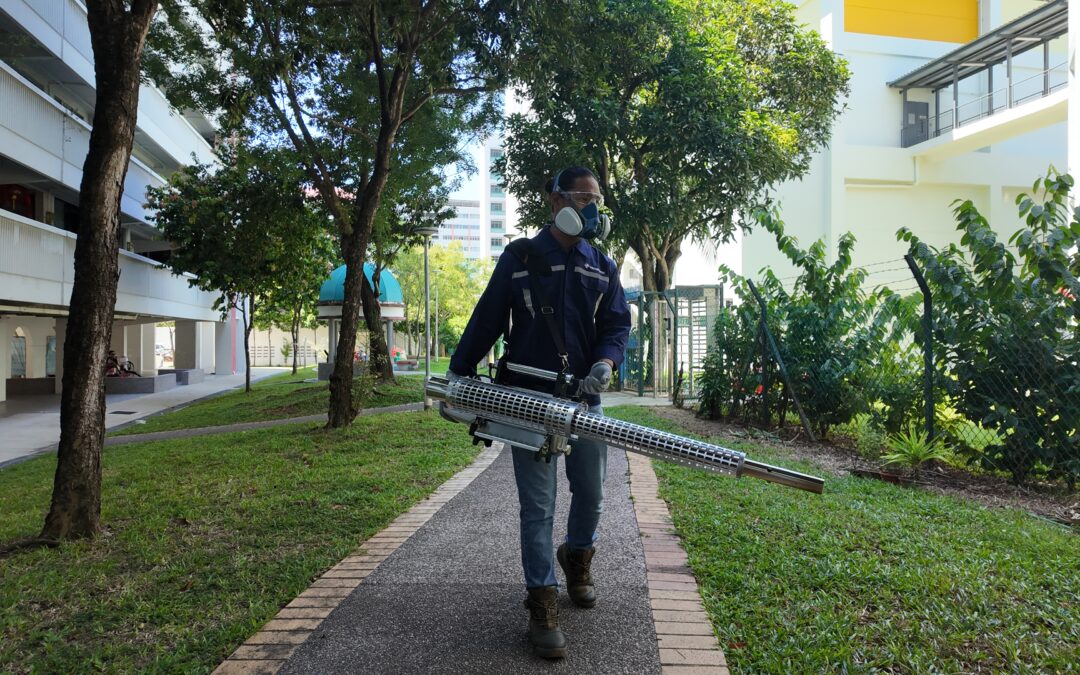
Choosing the right pest control company in Singapore comes down to more than checking for an NEA licence. Licensing is the baseline, not the full picture — a Vector Control Operator’s licence technically only covers five core vectors by default, industry specialisation varies widely between providers, and the difference between a genuinely structured programme and a one-off spray visit often isn’t obvious until something goes wrong. This guide walks through exactly what to check before signing a contract, especially for business owners who need documentation, accountability and a partner who understands their specific industry.
Key Takeaways
- NEA licensing is the baseline requirement, not a guarantee of quality — verify both the company’s Vector Control Operator (VCO) registration and the individual technician’s certification, since they carry separate expiry dates.
- A standard VCO licence technically covers only five core vectors — mosquito, rat, rat flea, cockroach and fly — with coverage for other pests like termites and bed bugs left to each company’s discretion.
- Industry specialisation matters more for commercial buyers than for residential ones, since a provider experienced in F&B compliance handles a restaurant very differently from one focused mainly on HDB flats.
- A proper inspection should identify the pest species, entry points and extent of activity before any treatment is proposed, with findings documented in writing.
- Documentation, warranty terms and follow-up policy are where many providers differ most, even when their upfront pricing looks similar.
- The cheapest quote is often the most expensive option long-term, since lower prices typically reflect fewer inspection steps, lower-quality treatment, and no structured follow-up.
Start With Licensing — But Know What It Actually Covers
Every legitimate pest control provider in Singapore operates under a licensing framework administered by NEA, and this is genuinely the first thing to check before engaging any company. But “NEA-licensed” is a broader claim than most business owners realise, and understanding what it actually means helps avoid a common blind spot.
Two Separate Licences, Two Separate Checks
There are two distinct levels of licensing that matter here. The company itself must be registered as a Vector Control Operator (VCO), which is the certification that allows it to legally operate a pest control business in Singapore. Separately, the individual technician performing the work needs to hold a valid Vector Control Technician (VCT) or Vector Control Worker (VCW) certification. These aren’t the same thing, and they don’t necessarily expire on the same schedule — a company can hold a fully valid VCO registration while an individual technician’s certification has lapsed, or while a job has been subcontracted to someone without the appropriate personal licence at all. Asking directly whether the technician performing your treatment holds a current VCT or VCW licence, not just whether the company is registered, is a reasonable and increasingly necessary question.
What a Standard Licence Actually Covers
Here’s the detail that catches many business owners off guard: a standard Vector Control Operator licence technically only covers five core vectors by default — mosquito, rat, rat flea, cockroach and fly. Whether a provider also handles termites, bed bugs, ants, birds or other pests is a matter of the individual company’s own discretion and additional expertise, not something automatically bundled into the base licence. This doesn’t mean a provider without deep termite or bed bug experience is doing anything improper — but it does mean business owners shouldn’t assume that “NEA-licensed” automatically translates to comprehensive coverage of every pest they might encounter. If your business has a specific concern, such as termites in a landed commercial property or recurring bed bug activity, it’s worth asking directly about the provider’s specific experience and track record with that pest, rather than assuming general licensing covers it.
Industry and Sector Specialisation Matters
For commercial buyers in particular, industry specialisation matters more than it might for a residential customer dealing with an isolated ant trail. A provider experienced primarily in HDB and condominium treatments approaches a job very differently from one that regularly services restaurants under SFA scrutiny, food manufacturing plants working within HACCP prerequisite programmes, or warehouses with audit obligations tied to BRC or FSSC 22000 certification. The treatment methods, documentation standards, and even the scheduling flexibility required differ meaningfully by sector.
When evaluating a provider for a commercial contract, it’s worth asking directly about their experience in your specific industry — not just “do you do commercial pest control,” but “how many clients do you currently service in food manufacturing” or “what does your standard documentation look like for a restaurant client.” A provider genuinely experienced in your sector should be able to answer these questions specifically, rather than falling back on generic language about being “commercial pest control specialists” without concrete detail.
What a Proper Inspection and Treatment Plan Should Look Like
Before any treatment is proposed, a properly run inspection should identify the pest species involved, likely entry points, nesting or harbourage areas, and the overall extent of activity. This isn’t a minor procedural step — treatment decisions that skip this stage tend to address symptoms rather than causes, which is part of why some pest problems seem to “come back” despite apparently being treated.
A credible provider should be willing to walk through their findings with you in plain language, explain why a specific treatment method is being recommended over alternatives, and provide this in writing rather than as a verbal summary you’re expected to remember. If a provider proposes treatment without ever having conducted a proper inspection, or offers a single generic treatment regardless of what pest is actually present, that’s a meaningful signal about how the rest of the engagement is likely to go.
Documentation and Audit Readiness
For business owners, documentation quality is one of the clearest differentiators between pest control providers, even when their pricing looks nearly identical on paper. A legitimate operator should provide a written report after every visit — detailing what was found, what was applied, and what follow-up is recommended — as standard practice, not as a paid add-on or something you have to specifically request.
This matters even more for regulated businesses. If your business operates under HACCP prerequisite requirements, needs documentation for SFA compliance, or is working toward ISO 22000, FSSC 22000 or BRC certification, ask specifically whether the provider’s standard reporting format is structured to support those requirements, or whether you’d need to request customised documentation separately. A provider unfamiliar with what these frameworks actually expect from pest control records is likely to produce documentation that looks fine at a glance but falls short under genuine audit scrutiny — something businesses often only discover during the audit itself, when it’s too late to fix retroactively.
Not sure whether your current provider’s documentation would hold up under an SFA or NEA review? Precision Pest can review your existing pest control records and show you what audit-ready documentation actually looks like for your industry. Get in touch for a free review.
Treatment Methods and Chemical Safety
Ask directly what products a provider intends to use, and expect them to be able to name the specific product and confirm it’s NEA-registered — pesticides used commercially in Singapore must be registered, and a legitimate operator should have no trouble naming what they’re applying and why. This becomes especially important for businesses with sensitive environments: food preparation areas, healthcare facilities, or workplaces with children present, such as childcare centres or schools.
A provider prioritising Integrated Pest Management principles — favouring targeted, low-toxicity methods and treating broad chemical application as a last resort rather than a default — is generally a stronger long-term choice than one whose standard approach is a broad residual spray regardless of context. This isn’t just a preference; it increasingly reflects where Singapore’s own regulatory expectations are heading, following the formalisation of Integrated Pest Management principles under Singapore Standard SS 721:2025.
Contract Structure: One-Off vs Ongoing Programme
Understand clearly whether you’re being offered a single treatment visit or an ongoing pest management programme, since these serve genuinely different purposes and shouldn’t be confused with each other. A one-off treatment addresses an isolated, confirmed issue. An ongoing programme — typically structured around a regular inspection schedule matched to your business’s risk level — is what actually prevents recurring problems and builds the kind of trend documentation that regulated businesses need.
For most commercial premises, particularly those in food, healthcare or any audit-obligated sector, a structured ongoing programme is the more appropriate choice, even if a one-off visit looks cheaper on the surface. Ask specifically what’s included in the ongoing programme: how many visits per year, what’s covered in each visit, whether emergency callouts are included or billed separately, and how the frequency might be adjusted if activity increases.
Warranty and Follow-Up Policy
A credible pest control provider should stand behind their work with a clearly defined warranty period, specifying exactly what triggers a free retreatment if the problem isn’t resolved. Ask what the warranty actually covers, how long it lasts, and whether there are conditions attached — some providers, for instance, exclude coverage if certain housekeeping or structural recommendations weren’t followed, which is worth understanding upfront rather than discovering after a treatment appears to have failed.
Equally important is what happens after treatment, beyond the warranty itself. A provider that schedules a genuine follow-up visit to confirm the treatment worked demonstrates a different level of commitment than one that considers the job complete the moment the technician leaves the premises. This distinction matters particularly for rodent and termite issues, where confirming genuine resolution — not just an initial reduction in visible activity — often requires a dedicated check weeks later.
Response Time and Availability
Pest issues don’t always arrive on a convenient schedule, and for businesses in particular — where a sighting during operating hours can have immediate reputational consequences — response time matters. Ask what a provider’s typical response time looks like for both routine bookings and urgent situations, and whether they offer emergency or same-day service for confirmed active infestations. A provider who can only offer appointments weeks out, with no clear emergency pathway, may not be the right fit for a business where pest activity carries immediate operational or compliance stakes.
Questions to Ask Before Signing a Contract
Bringing together the points above, these are the specific questions worth asking any provider before committing to a contract:
- Can you provide your NEA Vector Control Operator licence number, and will the technician on-site hold a current VCT or VCW certification?
- What specific pests does your team have direct experience treating, beyond the standard licensed vectors?
- Do you have experience working with businesses in my specific industry, and can you describe what that typically looks like?
- What does a standard inspection involve, and will I receive written findings before any treatment is applied?
- What products do you use, and can you confirm they’re NEA-registered?
- What does your written service report include after each visit?
- Is your documentation format suited to HACCP, SFA, ISO or other audit requirements relevant to my business?
- What’s the difference between your one-off and ongoing programme options, and which would you recommend for my situation?
- What does your warranty cover, for how long, and under what conditions?
- What’s your typical response time for both scheduled visits and urgent callouts?
A provider willing to answer these questions specifically and confidently, rather than deflecting to generic marketing language, is generally a strong sign you’re dealing with a genuinely professional operation.
Red Flags to Watch For
Certain signals are worth treating as a reason to keep looking elsewhere, regardless of how competitive the pricing might seem:
- Cannot provide an NEA licence number, or becomes evasive when asked to confirm it
- No written report or documentation offered after treatment, with findings communicated only verbally
- A single generic treatment proposed for every pest, without any inspection or species identification first
- No clear warranty or follow-up policy, or vague answers when asked what triggers a free retreatment
- Unwillingness to name the specific products being used, or inability to confirm NEA registration
- Pressure to sign a long-term contract immediately, without a proper site assessment first
- Reviews that seem thin or inconsistent relative to how long the company claims to have operated
None of these signals alone is necessarily disqualifying, but two or more occurring together is a reasonable basis to look elsewhere, even if the initial quote seemed attractive.
Price vs Value: Why the Cheapest Quote Is Rarely the Best
It’s worth being direct about this: the lowest quote in a competitive comparison is typically low for a reason, and that reason is rarely “efficiency.” More often, it reflects fewer inspection steps, lower-quality treatment formulations, faster visits with less thorough coverage, and no structured follow-up built into the price. For a business, the actual cost of a failed or incomplete treatment — repeat infestations, reputational damage, a failed audit, or in food-handling environments, potential regulatory consequences — routinely exceeds whatever was saved on the initial quote.
This doesn’t mean the most expensive option is automatically the best choice either. The more useful comparison is value: what’s actually included in the price — inspection thoroughness, documentation, warranty terms, follow-up visits, industry-specific expertise — rather than the headline number alone. Two quotes that look similar on price can represent very different levels of actual service once you compare what’s included.
How Precision Pest Meets These Standards
At Precision Pest, we hold full NEA Vector Control Operator registration, with individually certified technicians on every job, and we’re happy to provide our licence details upfront rather than treating it as a reluctant disclosure. Every engagement starts with a proper site inspection and written findings before any treatment is proposed, and our service reports are structured to support HACCP, SFA and ISO-aligned documentation needs for businesses that require it. We work across a genuine range of commercial sectors — from restaurants and food manufacturing plants to offices and warehouses — and our commercial pest control programmes are built around Integrated Pest Management principles rather than defaulting to broad chemical treatment. We’re transparent about our warranty terms and follow-up process from the first conversation, so you know exactly what you’re agreeing to before signing anything.
Frequently Asked Questions about Pest Control Company
A Vector Control Operator (VCO) licence is issued to the company and permits it to legally operate a pest control business, while a Vector Control Technician (VCT) or Worker (VCW) licence is issued to individual staff members who physically carry out the treatment.
Not automatically. A standard Vector Control Operator licence covers five core vectors — mosquito, rat, rat flea, cockroach and fly — by default, with coverage for other pests like termites and bed bugs left to each company’s individual expertise and discretion.
Estimates vary, but NEA has previously reported over 450 registered vector control operators, meaning the market is genuinely competitive and worth comparing carefully rather than choosing the first option found.
For most commercial premises, particularly those in food, healthcare or audit-obligated sectors, a structured ongoing programme provides better long-term protection and the documentation regulated businesses typically need.
Areas inspected, pest activity found (or confirmed absent), products and methods used, and clear recommendations, ideally provided in writing after every visit rather than communicated only verbally.
Ask directly for their NEA Vector Control Operator licence number, and confirm the individual technician performing the work holds a current Vector Control Technician or Worker certification.
Rarely. Lower quotes often reflect fewer inspection steps, lower-quality treatment, and no structured follow-up, which can end up costing more if the underlying problem isn’t properly resolved.
Different sectors carry different compliance requirements and treatment sensitivities — a provider experienced in food manufacturing or F&B compliance handles a job very differently from one focused mainly on residential properties.
A clearly defined period during which the provider will return for a free retreatment if the problem isn’t resolved, along with clear terms about what conditions might affect that coverage.
Ask about licensing verification, sector-specific experience, inspection and documentation standards, product transparency, contract structure, warranty terms, and typical response times, ideally getting answers in writing rather than relying on verbal assurances.
Not necessarily. IPM is a structured methodology involving inspection, prevention, monitoring and targeted treatment, while “eco-friendly” typically refers only to the specific products used — a provider can use gentler products without running a full IPM programme.
This varies by business need, but be cautious of any provider pressuring you into a long-term commitment before conducting a proper site assessment, since the right contract length should follow from an accurate understanding of your property’s actual risk profile.
Summary
Choosing the right pest control company in Singapore starts with licensing, but genuinely thorough due diligence goes several steps further — understanding what a standard licence actually covers, verifying sector-specific experience, and scrutinising documentation, contract structure, warranty terms and treatment transparency before committing to anything. For business owners in particular, the provider you choose isn’t just responsible for eliminating pests; they’re a direct contributor to your compliance posture, your audit readiness, and ultimately your business’s reputation. Taking the time to ask the right questions upfront is considerably cheaper than discovering the gaps in a provider’s approach after a failed treatment or a difficult audit.
If you’d like a straightforward conversation about what a properly structured pest management partnership should look like for your business, Precision Pest offers a free site assessment across Singapore. Contact our team to find out what a genuinely thorough programme looks like for your industry.
Explore Expert Pest Control Guides
READY TO PROTECT YOUR PROPERTY?