
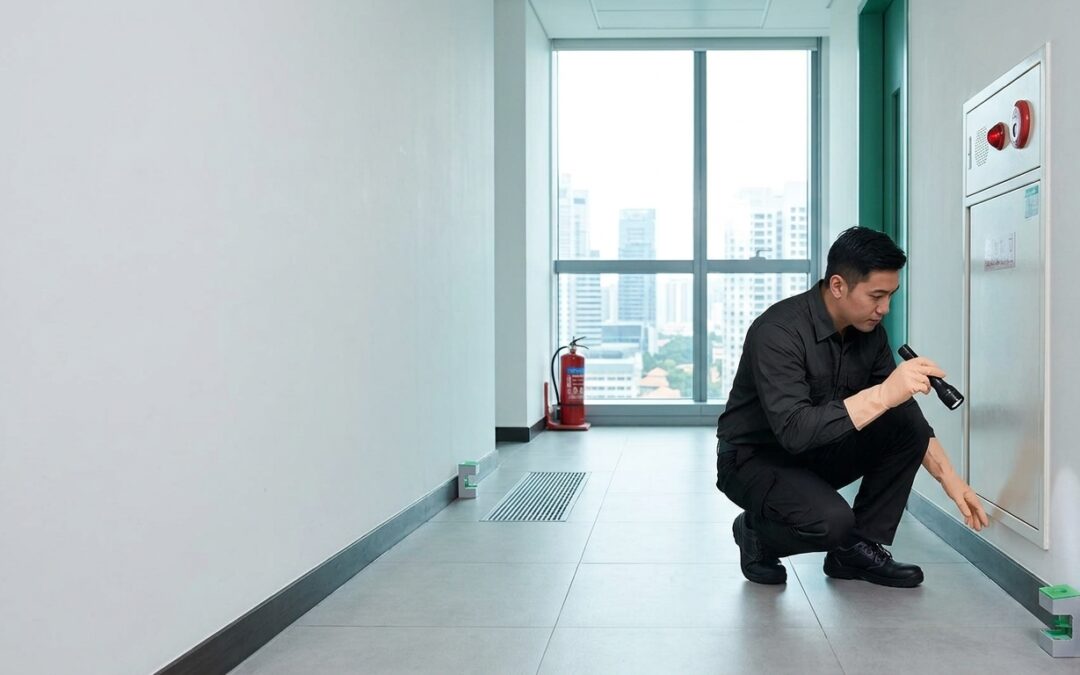
A commercial pest inspection in Singapore typically follows a structured process — a walkthrough and interview, zone-by-zone physical checks, monitoring device review, risk assessment, treatment where needed, and a documented service report. Knowing what to expect helps business owners prepare properly, ask the right questions, and get more value out of every visit rather than treating it as a routine box-ticking exercise. This guide walks through each step of a typical commercial pest inspection, from what happens before the technician arrives to what a clean result actually means.
Key Takeaways
- A properly run commercial pest inspection follows a consistent structure: walkthrough, zone-by-zone checks, monitoring device review, risk assessment, treatment if needed, and documentation.
- Preparing your premises before the technician arrives — clearing access to storage areas, briefing staff, flagging recent activity — makes the inspection more thorough and efficient.
- Inspectors check far more than visible pest activity, including moisture levels, structural entry points, and monitoring devices placed during previous visits.
- A “clean” inspection result is still valuable — it confirms your baseline and gives the technician a reference point for spotting changes at the next visit.
- Documentation from each visit should feed into a trend record over time, not exist as a series of disconnected reports.
- Most routine commercial inspections take between 30 minutes and a few hours, depending on premises size and complexity, with larger facilities like warehouses or food plants taking longer.
Before the Inspection: How to Prepare
A commercial pest inspection is more effective when the premises is ready for it, not because inspectors need a spotless environment, but because access and information both directly affect how thorough the visit can be. Clearing access to storage areas, cupboards and equipment voids lets the technician actually see the zones that matter most, rather than working around obstacles. Briefing relevant staff — particularly anyone who handles food, waste or storage — means the technician can ask about recent sightings or concerns directly from the people most likely to have noticed something. If your business has flagged any specific activity since the last visit, having that noted down before the inspection starts helps the technician focus attention where it’s actually needed rather than starting from a blank slate every time.
It’s worth designating a single point of contact for the visit, even in larger businesses where several staff members might interact with the technician throughout the day. Having one person who can speak to the premises’ history, coordinate access to restricted areas, and receive the findings directly at the end of the visit tends to produce a more useful outcome than a technician piecing together fragments of information from whoever happens to be around. For businesses with an ongoing pest management contract, it’s also worth having the previous service report on hand, since referencing it during the walkthrough gives the technician an immediate baseline to compare against, rather than starting the assessment from scratch each time.
Step 1 — The Walkthrough and Interview
Most commercial inspections begin with a conversation, not a checklist. The technician typically asks about any pest activity noticed since the last visit, recent changes to the premises (new equipment, renovation work, a shift in waste management routine), and any specific areas of concern raised by staff or management. This step matters more than it might seem — a technician working from staff-reported information can direct their physical inspection far more efficiently than one working purely from a generic route through the building.
Step 2 — Zone-by-Zone Physical Inspection
Once the interview is complete, the technician moves through the premises systematically, checking the zones most likely to reveal pest activity or the conditions that attract it.
Storage and Kitchen Areas Food storage, dry goods and equipment undersides get particular attention, since these zones combine the food sources and undisturbed spaces most pests are drawn to.
Waste Areas and Drains Bin centres, grease traps and floor drains are checked for both direct pest activity and the sanitation conditions — standing moisture, food residue — that sustain it over time.
Perimeter and Structural Entry Points The building’s exterior, door seals, and any structural gaps are assessed for signs of pest entry, since exclusion is generally more effective than treating activity after it’s already established indoors.
Ceiling Voids, Roof Spaces and Hard-to-Reach Areas Rooftops, false ceilings and roof spaces are among the most commonly overlooked zones in a routine walkthrough, precisely because they’re dark, tight and rarely disturbed — exactly the conditions rodents in particular favour.
Moisture Testing Many technicians use moisture meters to identify damp areas that aren’t immediately visible, since elevated moisture levels are a leading indicator for both cockroach and termite activity even before any direct sighting occurs.
Step 3 — Checking Monitoring Devices and Bait Stations
If your business already has an ongoing pest management contract, the inspection includes checking any monitoring devices, bait stations or traps placed during previous visits. This step does two things: it confirms whether any activity has occurred since the last check, and it provides trend data over time, which is often more useful than a single snapshot for understanding whether a property’s pest pressure is increasing, decreasing or holding steady.
Not sure whether your current pest management programme includes proper monitoring, not just scheduled spraying? Precision Pest can review your existing setup and show you what a properly documented monitoring programme should look like. Get in touch to arrange a review.
Step 4 — Identifying Pest Activity and Risk Level
Where activity is found, correct identification comes before any treatment decision. Different pests call for different approaches — a German cockroach infestation is treated differently from an ant trail, and signs that might suggest rodent activity need to be distinguished from an unrelated issue entirely. The technician also assesses risk level based on where the activity was found — activity near a production line or food prep area is treated with more urgency than the same species found in a low-traffic storage corner, even if the underlying pest is identical.
Step 5 — Treatment Decision and Application (if needed)
Not every inspection results in treatment, and that’s a reasonable outcome, not a wasted visit. Where treatment is warranted, the method depends on the pest, the location, and the sensitivity of the surrounding environment — gel baiting in food-handling areas, targeted exclusion work at identified entry points, or broader treatment where an established infestation requires it. In sensitive environments like food preparation zones or healthcare facilities, treatment methods are deliberately more conservative, favouring low-toxicity, targeted approaches over broad application.
Step 6 — Documentation and Service Report
A properly run inspection ends with documentation, not just a verbal summary on the way out. A useful service report typically includes the areas inspected, any activity found (or confirmation of none), treatment applied if relevant, and recommendations for the business going forward. This documentation matters well beyond the immediate visit — for restaurants and other regulated businesses, it forms part of the audit trail expected by SFA and NEA, and for any commercial premises, it’s what turns a series of disconnected visits into an actual trend record worth reviewing.
After the Inspection: What Happens Next
What happens after the visit depends on what was found. A clean inspection typically means returning to the standard schedule, whatever that is for your premises type. Where activity was found and treated, a follow-up inspection is generally recommended within a few weeks to confirm the treatment worked, rather than assuming success and returning immediately to routine spacing between visits. Over time, each inspection’s findings should feed into a broader trend record, letting both the business and the provider spot patterns — recurring activity near a specific drain, seasonal spikes, a gradual increase that a single visit wouldn’t reveal on its own.
This is also the point where a business should expect to receive practical recommendations, not just a summary of findings. If moisture was identified as a contributing factor, that might mean flagging a leaking pipe to your maintenance team. If an entry point was found at the building perimeter, that might mean a referral for structural sealing work rather than an ongoing treatment cycle that only ever manages the symptom. A provider that stops at “treatment applied, will monitor” without connecting the finding back to its underlying cause is leaving part of the value of the inspection on the table — the whole point of a proper walkthrough is catching the conditions that invite pests in, not just the pests that have already arrived.
How Long Does a Commercial Pest Inspection Take?
Most routine commercial inspections take somewhere between 30 minutes and a couple of hours, depending heavily on premises size and complexity. A small office pantry check is naturally quicker than a full walkthrough of a warehouse or a food manufacturing facility, where the sheer floor area, number of storage zones, and monitoring device count all add time to a thorough visit. Facilities pursuing HACCP or ISO-aligned certification sometimes see longer visits as well, given the more detailed documentation these frameworks expect from each inspection.
What a Clean Inspection Result Actually Means
A “clean” result — no activity found — is genuinely valuable, not simply an uneventful visit. It confirms your current baseline, gives the technician a clear reference point for spotting changes at the next inspection, and validates that whatever prevention measures are currently in place are working. Businesses sometimes treat a string of clean inspections as a reason to loosen the schedule, but a consistent clean record is usually evidence that the current frequency and prevention approach are appropriately matched to the property’s risk level — reducing frequency without reassessing risk is a different decision from simply feeling reassured by good results.
Common Questions Business Owners Ask During Inspections
Facility managers and business owners frequently ask technicians about the reasoning behind specific recommendations, not just what was found. Common questions include why a particular treatment method was chosen over another, what’s driving a recommended increase in frequency, whether a specific zone needs structural work versus ongoing monitoring, and how findings compare to the property’s history. A technician willing to explain the reasoning behind their recommendations, rather than simply stating them, is generally a good sign of a provider running a genuine Integrated Pest Management programme rather than a purely transactional service.
How Precision Pest Conducts Commercial Inspections
At Precision Pest, every commercial inspection follows the same structured process, regardless of premises type — a thorough walkthrough and interview, systematic zone-by-zone checks, monitoring device review, and clear documentation you can actually use to track trends over time. We tailor the specific focus areas to your industry, whether that’s food-handling zones for a restaurant, server rooms for an office, or loading bays and racking for a warehouse, and we explain our findings and recommendations clearly rather than leaving you with a report full of jargon. Our commercial pest control team is happy to walk you through exactly what to expect before your first inspection.
Frequently Asked Questions
What should I do to prepare for a commercial pest inspection? Clear access to storage areas and equipment voids, brief relevant staff on the visit, and flag any recent pest activity or concerns so the technician can focus their inspection accordingly.
How long does a commercial pest inspection usually take? Most routine inspections take between 30 minutes and a couple of hours, depending on premises size, with larger facilities like warehouses or food plants typically taking longer.
Does every inspection result in treatment? No. A significant number of inspections find no activity requiring treatment, which is a valuable outcome in itself, confirming your current baseline and prevention measures are working.
What areas does a technician check during a commercial inspection? Typically storage and kitchen areas, waste zones and drains, building perimeter and entry points, ceiling voids and hard-to-reach spaces, and any existing monitoring devices or bait stations.
Why do technicians use moisture meters during inspections? Elevated moisture levels are a leading indicator for pests like cockroaches and termites, often revealing risk before any direct pest sighting occurs.
What happens after pest activity is found and treated? A follow-up inspection is generally recommended within a few weeks to confirm the treatment worked, before returning to the standard inspection schedule.
What should a good pest control service report include? Areas inspected, any activity found or confirmed absent, treatment applied if relevant, and clear recommendations, ideally reviewed alongside previous reports rather than filed individually.
Is a clean inspection result actually useful, or just an uneventful visit? It’s genuinely useful — it establishes a baseline, validates current prevention measures, and gives the technician a reference point for identifying any changes at future visits.
Should I ask questions during a commercial pest inspection? Yes. Asking why a specific treatment or frequency is being recommended helps you understand your property’s actual risk profile, and a good technician should be able to explain their reasoning clearly.
Do inspections differ by industry, like restaurants versus offices? Yes. While the overall structure stays consistent, the specific focus areas shift — food-handling zones and drains for restaurants, server rooms and pantries for offices, loading bays and racking for warehouses.
Summary
A commercial pest inspection isn’t a quick walk-through looking for visible pests — it’s a structured process covering preparation, a thorough zone-by-zone check, monitoring device review, risk assessment, treatment where warranted, and documentation that should build into a genuine trend record over time. Understanding this process helps business owners prepare properly, ask better questions during the visit, and get real value out of every inspection rather than treating it as a routine formality.
If you’d like to see what a properly structured commercial pest inspection looks like for your business, Precision Pest offers a free site assessment across Singapore. Contact our team to schedule your first visit.
Pest Control Advice & Resources
READY TO PROTECT YOUR PROPERTY?